The landscape of education is undergoing a seismic shift. For centuries, the model of traditional learning a teacher in a physical classroom with a group of students remained largely unchallenged. However, the dawn of the digital age, accelerated by global events, has catapulted online studies platforms to the forefront of pedagogical discussion. This is not merely a trend but a fundamental reevaluation of how knowledge is acquired and disseminated. The debate between digital learning platforms and traditional education is complex, nuanced, and critical for students, educators, and policymakers alike. This in-depth analysis will explore the advantages, limitations, and ideal applications of both models, ultimately arguing that the future lies not in choosing one over the other, but in a synergistic integration of both.
A. Understanding the Core Models: Definitions and Evolution
Before diving into comparisons, it’s essential to define what we mean by each learning model.
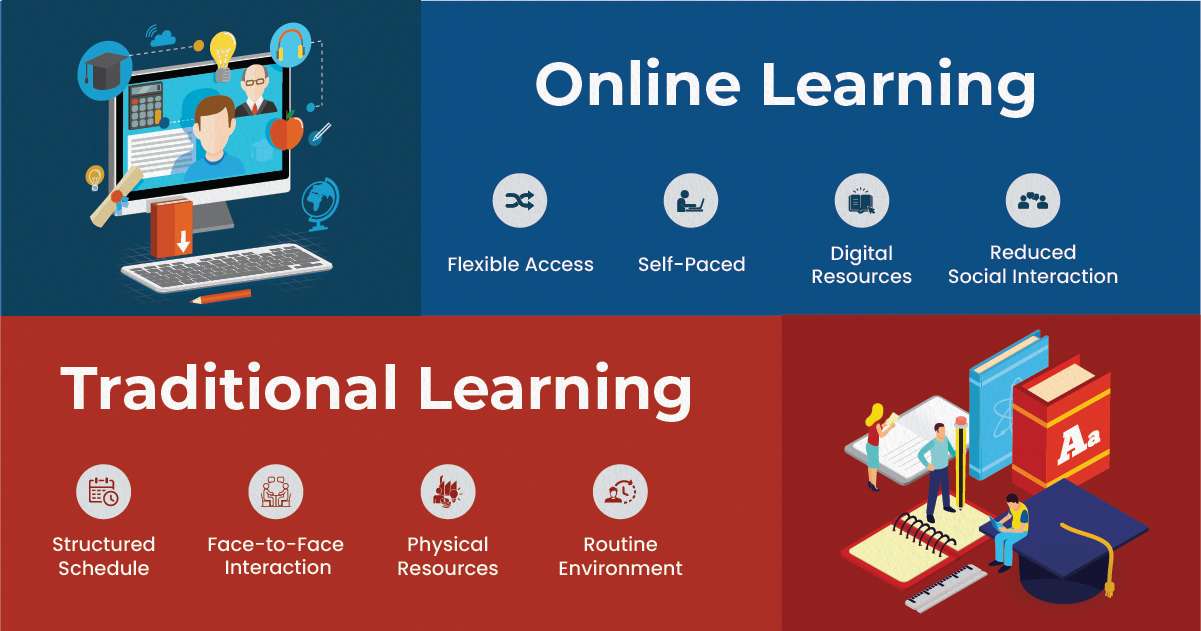
Traditional Learning, often called face-to-face learning, is the conventional educational structure. It is characterized by:
-
Physical Presence: Students and instructors share a common physical space a classroom, lecture hall, or laboratory.
-
Synchronous Scheduling: Learning occurs on a fixed schedule, with classes meeting at specific times and locations.
-
Structured Social Interaction: The environment is inherently social, fostering direct, real-time communication and collaboration among peers and between students and teachers.
-
Standardized Pace: The curriculum often moves at a pace set by the instructor or the institution, designed to cater to the average learner.
This model has its roots in ancient institutions and has been the bedrock of formal education, relying on direct mentorship, printed materials, and a structured, linear progression.
Online Studies Platforms (Digital Learning) represent the modern, technology-driven approach. This model leverages the internet and digital tools to deliver educational content. Its hallmarks include:
-
Virtual Environment: Learning happens through digital interfaces Learning Management Systems (LMS), video conferencing tools, and interactive apps.
-
Asynchronous Flexibility: While synchronous sessions exist (live webinars), a core feature is the ability to access pre-recorded lectures and materials at any time, from any location with an internet connection.
-
Automated and Adaptive Systems: Many platforms use algorithms to personalize learning paths, provide instant feedback on quizzes, and recommend content based on user performance.
-
Global Accessibility: It breaks down geographical barriers, allowing a student in one country to learn from an expert instructor in another.
This model has evolved from simple correspondence courses to sophisticated, engaging platforms featuring virtual reality (VR), artificial intelligence (AI), and massive open online courses (MOOCs).
B. The Multifaceted Advantages of Digital Learning Platforms
The rise of online studies platforms is driven by a powerful set of benefits that address many limitations of the traditional system.
A. Unparalleled Flexibility and Convenience: This is the most significant advantage. Learners can fit their education around work, family, and other commitments. There is no commute, which saves time and money. This flexibility makes lifelong learning and upskilling accessible to a much broader demographic, including full-time professionals and parents.
B. Personalized Learning Experience: Digital platforms excel at catering to individual needs. Adaptive learning technologies can analyze a student’s performance and automatically adjust the difficulty of subsequent material, providing extra practice where needed or accelerating past mastered concepts. Students can also learn at their own optimal pace, revisiting challenging modules or skipping ahead as necessary.
C. Broader Access to Resources and Expertise: A student is no longer limited by the courses offered by their local institutions. They can take a niche coding course from a Silicon Valley expert, learn about ancient history from a Cambridge professor, or earn a certification from a top-tier university without relocating. The world’s knowledge is, quite literally, at their fingertips.
D. Development of Self-Discipline and Digital Literacy: Success in an online environment requires and fosters high levels of self-motivation, time management, and personal responsibility. Furthermore, navigating these platforms inherently improves digital literacy a crucial skill in the modern workforce.
E. Cost-Effectiveness: While not always free, online courses and programs are often significantly less expensive than their traditional counterparts. Students save on costs associated with commuting, housing, and physical textbooks. Institutions can also reach more students without the overhead of maintaining large physical infrastructures.
C. The Enduring Strengths of Traditional Classroom Learning
Despite the exciting advancements in digital education, the traditional classroom offers irreplaceable value that technology has yet to fully replicate.
A. Rich Social Interaction and Community Building: The classroom is a social ecosystem. It provides a structured environment for developing soft skills like teamwork, public speaking, and negotiation through spontaneous group discussions, debates, and projects. The camaraderie and peer support built in a physical classroom are powerful motivators and contribute significantly to mental well-being.
B. Immediate Feedback and Direct Mentor Access: The ability to raise a hand and get an immediate clarification from a teacher is invaluable. Instructors can read the room seeing confusion on students’ faces and adjust their teaching in real-time. This immediate, nuanced feedback loop is difficult to achieve in a purely digital asynchronous setting.
C. Structured Environment for Focused Learning: For many learners, the physical separation of “school” and “home” creates a psychological boundary that enhances focus. The structured timetable reduces procrastination and ensures a consistent learning rhythm, which is especially beneficial for students who struggle with self-discipline.
D. Hands-On and Experiential Learning: Certain disciplines are inherently physical. It is challenging to teach someone how to dissect a frog, create a sculpture, perform a chemistry experiment, or practice a surgical technique through a screen. Traditional labs, studios, and workshops provide essential hands-on experience that is core to mastery in these fields.
E. Cultivation of Discipline and Routine: The mandatory nature of attending classes at a set time instills a sense of discipline, punctuality, and respect for formal schedules attributes that are directly transferable to most professional environments.
D. Navigating the Limitations and Challenges
A balanced view requires an honest look at the drawbacks of each model.
Challenges of Online Learning:
-
The Digital Divide: Access to reliable high-speed internet and modern devices is not universal. This can exacerbate educational inequalities based on socioeconomic status and geographic location.
-
Lack of Social Interaction: Screen-mediated communication can lead to feelings of isolation, loneliness, and a lack of connection. The absence of informal “corridor conversations” can hinder networking and social skill development.
-
High Self-Motivation Requirement: The freedom of asynchronous learning is a double-edged sword. Without external structure, it is easy for students to fall behind, leading to high dropout rates in self-paced courses.
-
Potential for Distractions: The home environment is filled with distractions from social media and streaming services to household chores that can impede focused study.
Challenges of Traditional Learning:
-
Inflexibility: The rigid schedule can be a significant barrier for non-traditional students, such as those with jobs or caregiving responsibilities.
-
Pace and Personalization Limitations: Teachers often must teach to the middle of the class, potentially leaving both advanced and struggling students behind. Personalized attention is limited by high student-to-teacher ratios.
-
Higher Associated Costs: Tuition fees are typically higher, and additional costs for transportation, housing, and physical materials add a substantial financial burden.
-
Geographical Constraints: Students are limited to the institutions and programs available within a commutable distance, unless they are willing and able to relocate.
E. The Verdict: A Hybrid and Blended Learning Future
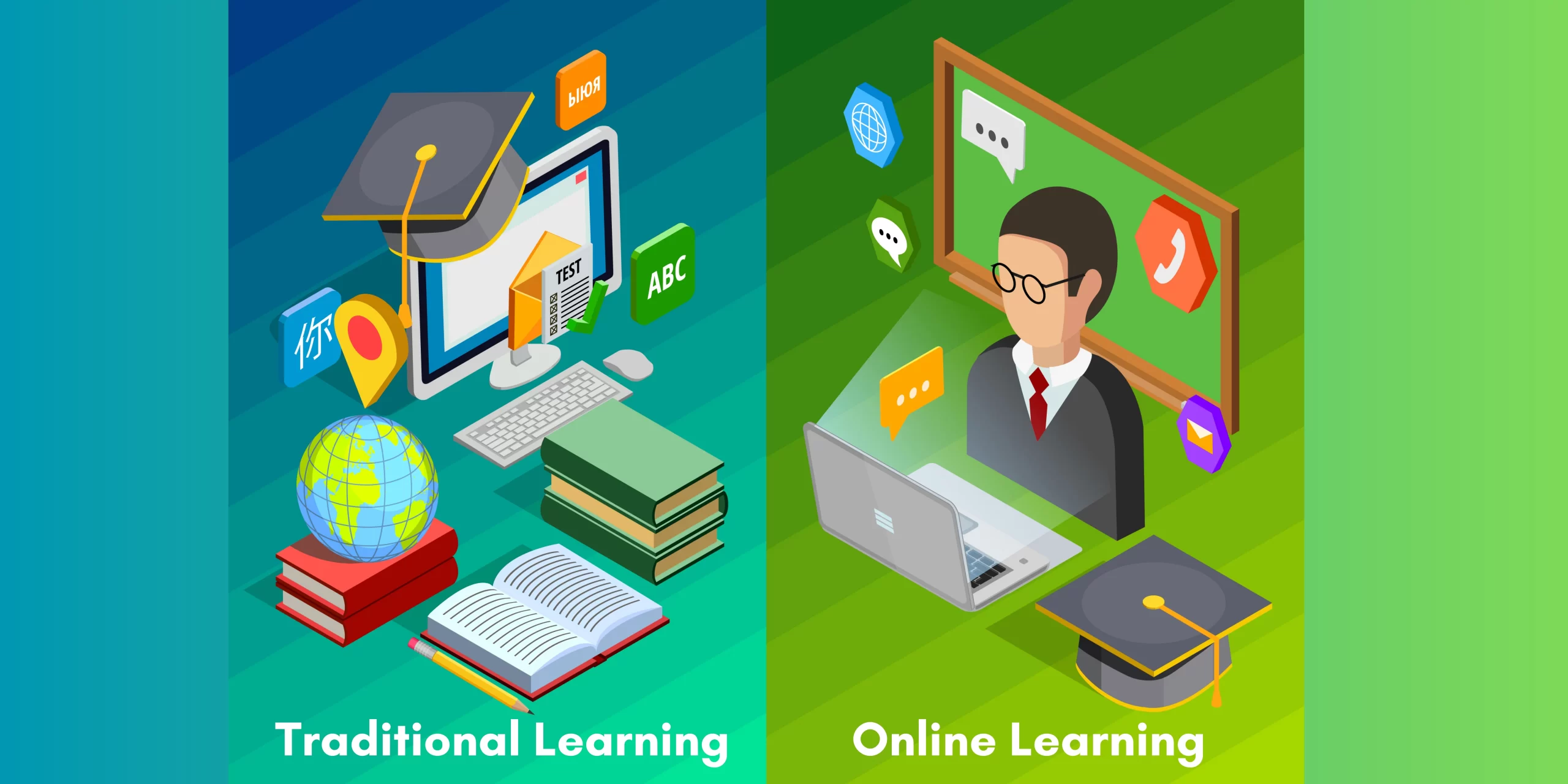
The question is not, “Which model is definitively better?” but rather, “Which model is better for whom, and for what purpose?”
The ideal educational future is not a binary choice but a spectrum. Blended Learning (or Hybrid Learning) emerges as the most powerful model, intelligently combining the best of both worlds.
A. A theoretical course (e.g., Introduction to Philosophy) can effectively use a platform for video lectures, readings, and online discussions, freeing up valuable classroom time for Socratic debates, deep dives into complex arguments, and direct interaction with the professor.
B. A hands-on skill course (e.g., Culinary Arts) might use online modules for teaching food theory and safety protocols, while reserving the physical kitchen for essential practical, hands-on training.
This approach allows for flexibility and personalized pacing while retaining the irreplaceable benefits of human connection, immediate feedback, and hands-on practice. It makes education more resilient, adaptable, and ultimately, more effective for a wider range of learners.
Conclusion: Choosing Your Path in the Modern Educational Landscape
The revolution in education is empowering. The dichotomy between digital learning platforms and traditional classrooms is creating a diverse ecosystem where individuals can choose the path that best aligns with their learning style, goals, and life circumstances.
For the self-motivated, tech-savvy learner seeking flexibility and specific skill acquisition, online studies platforms are an unparalleled resource. For those who thrive on direct social interaction, require hands-on experience, or benefit from a highly structured environment, the traditional classroom remains profoundly relevant.
As we move forward, the most successful educational institutions and students will be those who embrace a nuanced, integrated approach. They will leverage the efficiency, scale, and data-driven personalization of digital tools to enhance, not replace, the profound human connection and experiential depth that has always been the heart of true learning. The goal remains constant: to foster knowledge, critical thinking, and growth. Now, we simply have more paths than ever to achieve it.